Delhi Metro Train Advertising

Metro Train Advertising

Metro train advertising has emerged as a powerful and dynamic avenue for brands to connect with their target audiences in urban environments. As cities grow increasingly congested and populations rely more heavily on public transportation, metro transit systems have evolved into prime real estate for advertisers seeking to capture the attention of a captive audience. Let's delve into the world of metro train advertising, exploring its benefits, costs, and the role of specialized agencies such as Metro Train Advertising Agency and DMRC Advertising Agency.

Advertising Options
The Power of Metro Train Advertising

Metro train advertising offers unparalleled advantages for brands looking to enhance their visibility and engagement. With millions of commuters relying on metro systems for their daily commute, advertising in these spaces ensures exposure to a diverse and captive audience. From busy professionals to students and families, metro trains cater to a broad demographic, providing advertisers with the opportunity to reach a wide range of potential customers.

One of the key advantages of metro train advertising is its ability to deliver repeated exposure to commuters. Unlike traditional mediums where ads may be easily overlooked or ignored, metro train advertisements are strategically placed in high-traffic areas, ensuring that they are seen multiple times throughout the day. This repeated exposure helps reinforce brand messages and increases the likelihood of audience engagement and recall.

Understanding Metro Train Advertising Costs

Metro train advertising costs vary depending on factors such as the location, duration, and format of the campaign. Advertisers can choose from a variety of advertising options, including train wraps, platform displays, digital screens, and interior posters. Each option comes with its own pricing structure, with factors such as visibility and reach influencing the overall cost.

For example, advertising on prominent locations such as train exteriors or station entrances typically commands higher prices due to increased visibility. Similarly, campaigns run during peak hours or on popular metro lines may incur higher costs compared to off-peak or less frequented routes.

While metro train advertising costs may initially seem daunting, it's essential to consider the significant return on investment (ROI) that this form of advertising can deliver. With the ability to reach millions of commuters daily, metro train advertising offers unparalleled exposure and brand visibility, making it a cost-effective option for advertisers looking to maximize their impact.

The Role of Metro Train Advertising Agencies

Metro Train Advertising Agencies play a crucial role in helping brands navigate the complexities of metro train advertising. These specialized agencies, such as DMRC Advertising Agency, possess the expertise and industry knowledge needed to plan, execute, and optimize successful advertising campaigns on metro transit systems.

From conducting market research and identifying target audiences to negotiating ad placements and managing campaign logistics, Metro Train Advertising Agencies handle every aspect of the advertising process. By leveraging their relationships with metro authorities and advertisers, these agencies ensure that brands achieve maximum visibility and impact with their campaigns.

In addition to campaign execution, Metro Train Advertising Agencies also provide valuable insights and analytics to help brands measure the effectiveness of their advertising efforts. Through detailed reporting and analysis, advertisers can gain valuable insights into audience engagement, ad performance, and ROI, allowing them to refine their strategies for future campaigns.

Metro train advertising offers a unique and compelling opportunity for brands to reach and engage with their target audiences in urban environments. With the guidance of specialized agencies such as Metro Train Advertising Agency and DMRC Advertising Agency, advertisers can harness the full potential of metro train advertising to drive brand awareness, engagement, and growth.

Frequently Asked Questions

Delhi Metro train advertising is a transit media format where brands place advertisements on the interior and exterior surfaces of metro trains. These ads travel across multiple routes daily, allowing brands to reach a large number of commuters throughout the city. It is one of the most impactful ways to ensure continuous visibility in an urban environment.

In metro train advertising, brands book specific ad spaces such as train exteriors, interior panels, or full wraps for a defined period. As trains operate on fixed routes across the city, the ads are repeatedly seen by daily commuters, ensuring consistent exposure and strong brand recall over time.

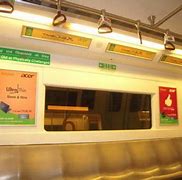
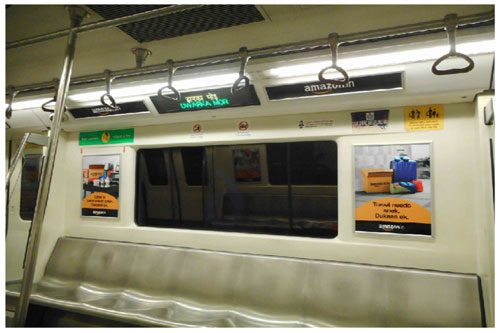
Delhi Metro offers multiple train advertising formats including full train wraps, partial wraps, interior panels, seat branding, and digital screens inside coaches. Each format serves different objectives, ranging from high-impact visibility to targeted engagement with passengers during their journey.

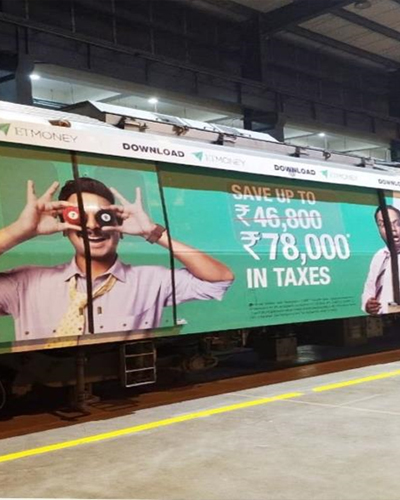
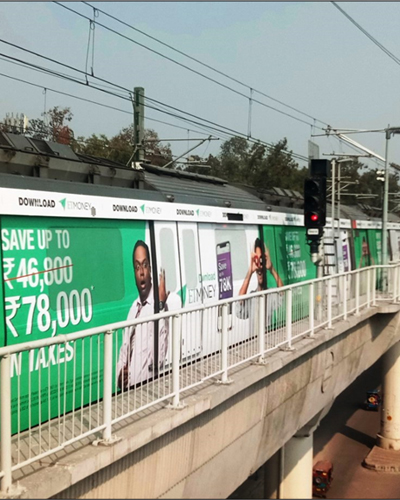
A full train wrap advertisement involves covering the entire exterior surface of a metro train with branded graphics. This transforms the train into a moving billboard that travels across multiple locations, delivering massive exposure and making the brand highly noticeable across the city.

Delhi Metro connects millions of commuters every day, including professionals, students, and families. This high daily footfall allows advertisers to reach a broad and diverse audience repeatedly, making it a powerful medium for large-scale brand visibility.

Metro train advertising is effective because it combines high visibility with repeated exposure. Since commuters use the metro regularly, they encounter the same ads multiple times, which helps build strong brand recall. Additionally, the captive environment ensures that ads receive better attention compared to many other formats.

The cost of metro train advertising in Delhi depends on several factors such as the type of ad format, train route, campaign duration, and visibility level. Premium routes and larger formats typically require higher investment, while smaller formats offer more budget-friendly options.

Yes, metro train advertising is considered cost-effective due to its wide reach and high frequency. Unlike many traditional media channels, it ensures repeated exposure to the same audience, which improves recall and delivers better value over time.

Metro train advertising is suitable for a wide range of industries including real estate, education, healthcare, retail, e-commerce, and startups. Any brand looking to build awareness among urban audiences can benefit from this medium.

For optimal results, metro advertising campaigns typically run for at least one month. Longer campaigns, such as 2–3 months, are more effective as they ensure repeated exposure and help strengthen brand recall among daily commuters.

Yes, metro train advertising offers flexible options that cater to different budgets. Small businesses can choose cost-effective formats like interior panels or limited placements, allowing them to benefit from metro advertising without requiring large investments.

Interior train advertising directly engages passengers during their travel time. Since commuters spend several minutes inside coaches, they are more likely to notice and interact with ads, resulting in higher attention and better message retention.

Exterior train advertising provides large-scale visibility as trains move across different routes and locations. It allows brands to reach not only passengers but also people at stations and nearby areas, making it ideal for broad awareness campaigns.

Yes, exterior train advertisements are visible both within metro stations and along elevated or ground-level tracks. This extended visibility helps brands reach audiences beyond just commuters, increasing overall campaign impact.

Metro train advertising is managed by authorized advertising agencies that coordinate with metro authorities. These agencies handle media planning, booking, creative execution, and campaign management to ensure smooth implementation.

Return on investment (ROI) in metro advertising is measured through factors such as brand recall, visibility, increase in customer inquiries, and footfall growth. Businesses may also track performance using campaign-specific metrics and market response.

Pricing is influenced by factors such as train type, route popularity, campaign duration, ad format, and placement visibility. High-traffic routes and premium formats like full wraps generally come at a higher cost.

Metro advertising often delivers better engagement compared to hoardings because it targets a captive audience in a controlled environment. Commuters are more likely to notice ads repeatedly, which leads to stronger recall.

Yes, metro advertising can be strategically planned based on routes, stations, and audience demographics. This allows brands to focus on specific geographic areas or target segments for more effective campaigns.

To book metro train advertising, you can connect with a specialized agency like Metro Spaces. They assist with media planning, pricing, creative design, and campaign execution, ensuring a smooth and effective advertising experience.

Costs depend on format, route, and duration. Options range from budget-friendly panels to premium train wraps. Call us to get exact pricing—9311449829.

Delhi Metro reaches over 70 lakhs of commuters daily, offering massive visibility and repeat exposure. Tap into this audience—contact us.

Train wraps and inside panels offer the highest recall due to repeated visibility during travel. Call us to get format recommendations today.

Yes, it provides cost-effective visibility and strong brand awareness for growing businesses. Launch your campaign—call now.

Get In Touch

Plan smarter Metro Advertising with expert support.

Contact Us