
Noida Metro Advertising – Aqualine Metro Advertising Agency
Noida Metro Advertising represents one of the most structured and high-impact transit media platforms in the National Capital Region. Spread across the Aqua Line of the Noida Metro, it offers brands access to a consistently moving, high-frequency commuter base within a controlled and premium environment.
Unlike conventional media channels that rely on fragmented attention, metro advertising operates within a defined mobility ecosystem, where audience presence, dwell time, and exposure frequency are inherently built into the system.
As Noida and Greater Noida continue to evolve as major residential and commercial hubs, the Aqua Line has emerged as a strategic communication corridor for brands seeking sustained visibility.
The Aqua Line Metro Network
The Aqua Line connects key urban nodes across Noida and Greater Noida, serving a mix of residential sectors, IT parks, educational institutions, and commercial. districts.
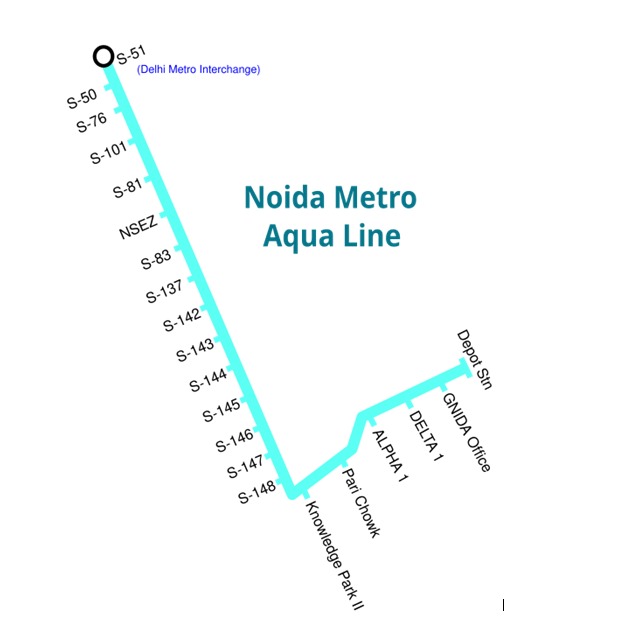
This network is characterized by daily commuter consistency, predictable travel patterns, defined station infrastructure & standardized passenger movement flows. These factors collectively create an environment where advertising is not incidental, but integrated into the commuter journey.
Media Environment and Audience Dynamics
Metro environments differ significantly from traditional outdoor or digital platforms. Passengers within the Noida Metro system are physically present within the media environment, less exposed to external clutter, Engaged in routine travel patterns & subject to repeated exposure across multiple touch points This results in a form of visibility that is progressive rather than momentary. Over time, the audience does not just see the message—they internalize it through repetition and familiarity.
Strategic Value of Aqualine (Noida) Metro Advertising
High-Frequency Audience Exposure: The Aqua Line serves a recurring commuter base, ensuring that advertising messages are delivered multiple times to the same audience. This frequency is a key driver of Brand recall, Recognition & Cognitive reinforcement .
Controlled and Premium Environment: Unlike roadside media, metro advertising operates within a regulated infrastructure. Clean and organized spaces, Defined advertising zones & Minimal visual clutter enhances both message clarity and brand perception.
Extended Dwell Time: Passengers interact with the environment across different stages like entry and ticketing areas, platforms and waiting zones & Inside train compartments. Each stage provides incremental exposure, significantly increasing the effectiveness of communication.
Urban, Consumption-Ready Audience: The Aqua Line caters to a demographic that is economically active, digitally aware, brand-conscious & urban in lifestyle and preferences. This makes it a relevant platform for a wide range of industries seeking high-quality audience engagement.
Continuity in Communication: Modern media often struggles with fragmented engagement. Noida Metro Advertising, in contrast, offers continuity. This consistency allows brands to establish long-term presence rather than short-term impressions.
Advertising Formats Across the Aqua Line
The Noida Metro network supports a comprehensive range of advertising formats designed to address varied campaign objectives.
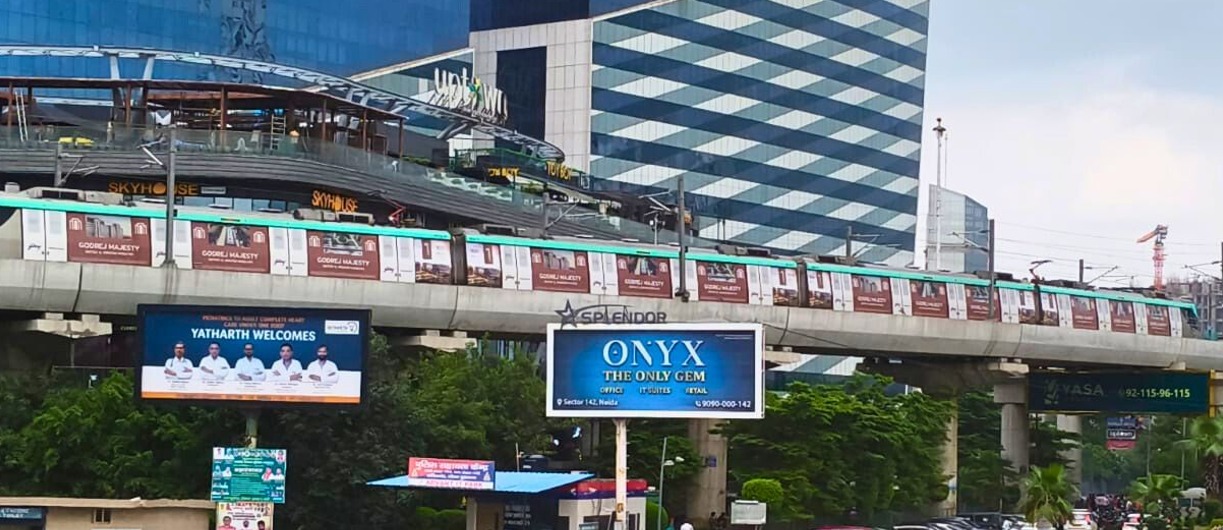
Train Exterior Branding: Full and partial train wraps provide large-format visibility across the entire network.
- High-impact visual dominance
- Continuous movement across stations
- City-wide visibility within the transit ecosystem
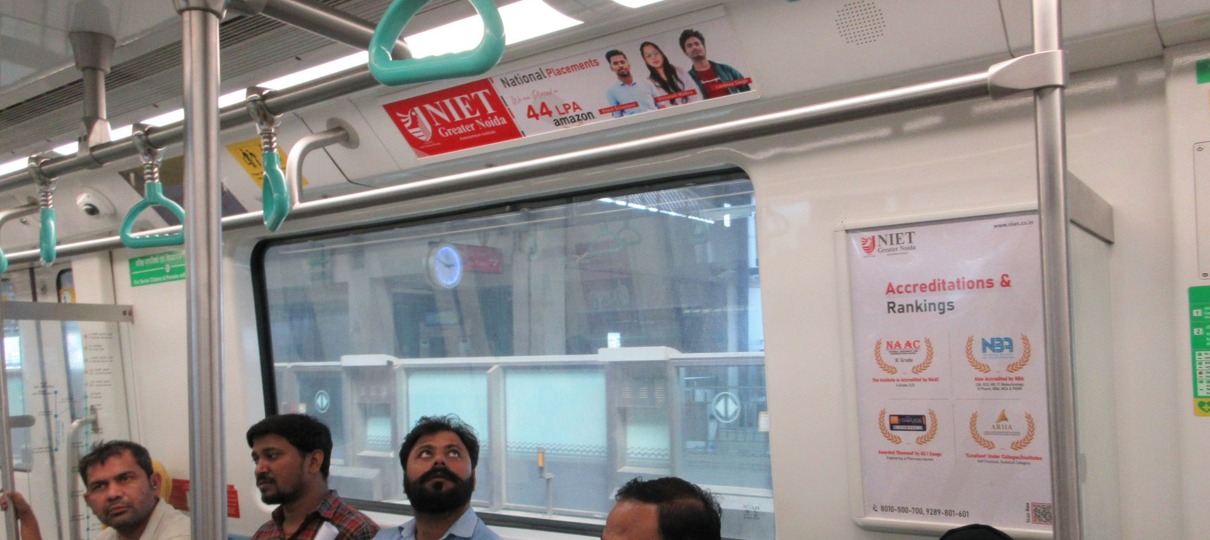
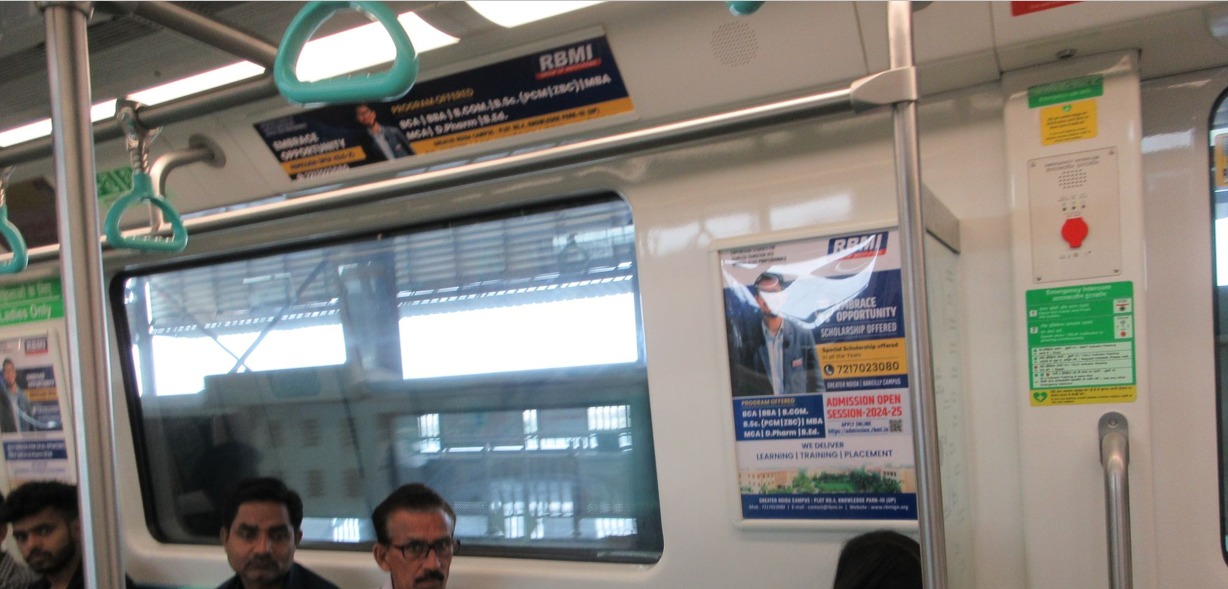
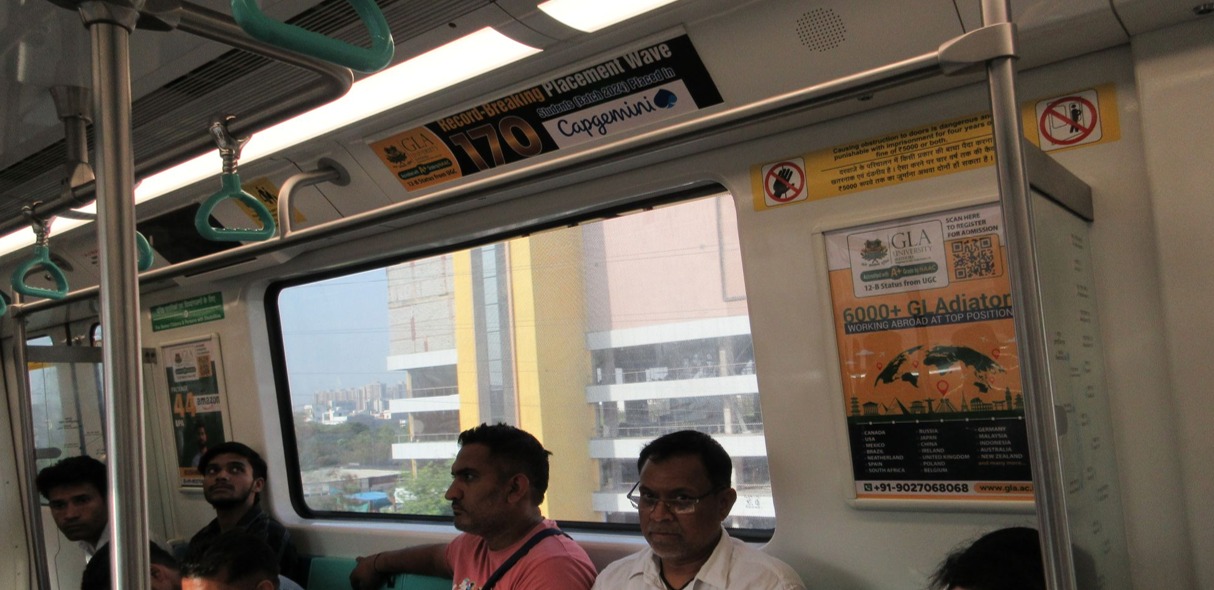
Interior Train Media: Inside train formats include panels, seat-back displays, and other placements within passenger compartments.
- Direct line of sight
- Longer engagement duration
- Reduced distraction levels
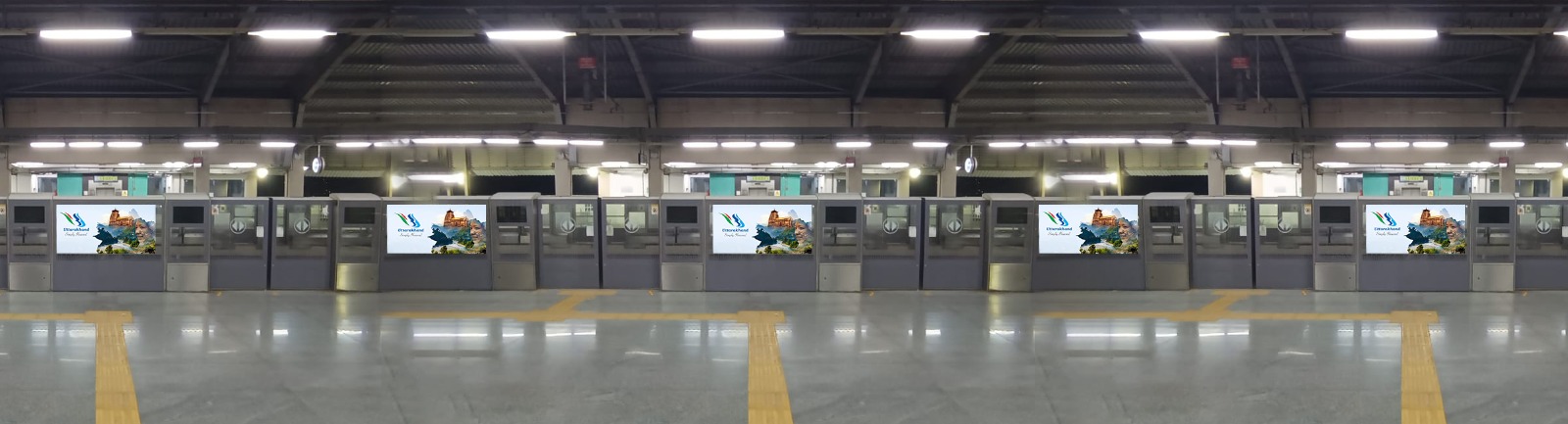
Station Media: Station environments offer multiple branding opportunities.
- Entry and exit zones
- Ticketing and concourse areas
- Platform-facing panels
These placements capture high footfall and dwell time simultaneously.
Noida Metro Advertising Options
Role of Aqualine Metro in Brand Building
Noida Metro Advertising is fundamentally aligned with brand-building objectives. It is not designed for immediate response metrics, but for establishing presence, reinforcing identity, & building familiarity over time. In a media landscape dominated by short attention spans, this platform delivers stability and consistency, both of which are critical for long-term brand equity.
Metro advertising functions effectively as part of an integrated media mix. When combined with digital and outdoor campaigns, it serves as a reinforcement medium, a frequency amplifier, a credibility enhancer. This multi-channel synergy improves overall campaign effectiveness by ensuring that messaging is both seen and remembered.
As consumer behaviour evolves, two key trends are evident- digital saturation and ad fatigue & reduced attention spans in open environments. Within this context, transit media such as Noida Metro offers a counterbalance between a distraction-limited setting, a predictable engagement window & a non-intrusive communication format. This makes it increasingly relevant for brands seeking meaningful visibility rather than passive impressions.
Sectors Leveraging Noida Metro Advertising
The platform is widely used across industries, including Real Estate and Infrastructure, Education and Training Institutions, Retail and Consumer Brands, Financial Services, Healthcare and Wellness. Its adaptability allows both large-scale and targeted campaigns to be executed effectively.
One of the defining strengths of Noida Metro Advertising lies in its operational consistency. Standardized formats, defined media inventory, Predictable audience flow ensures that campaigns are delivered with uniform visibility and reliability, which is often challenging in other media environments.
Noida Metro Advertising stands as a structured, high-frequency, and strategically relevant media platform within NCR. By combining audience consistency, environmental control, and repeat exposure, it enables brands to move beyond fragmented visibility and establish sustained presence within daily commuter journeys. As urban transit networks continue to expand, platforms such as the Aqua Line will play an increasingly important role in shaping how brands are experienced in real-world environments.
Noida Metro Advertising Cost
Noida Metro advertising is generally more cost-efficient than central Delhi routes, but it still delivers strong visibility—especially for brands targeting micro-markets like Sector 62, Sector 18, and Greater Noida. In most cases, a standard station branding option such as a backlit panel will cost around ₹30,000 to ₹50,000 per month, while simpler formats like pillar branding start lower and scale up based on placement and visibility. When you move towards high-impact locations like entry and exit gates, pricing increases because that’s where commuter attention is at its peak. Digital screens and LED formats fall in the premium category and can go beyond ₹1 lakh per month due to higher recall and dynamic content.
Train advertising—primarily through Delhi Metro lines connected to Noida like the Blue Line Advertising and Magenta Line Advertising—adds scale to the campaign. Interior panels are relatively affordable and can start from ₹5,000 onwards, but once you move to larger formats like train wraps or full train branding, the cost jumps significantly into lakhs. A full wrap may cost ₹3–₹5 lakh per month, while complete train branding can go even higher depending on route and duration. Overall, campaigns can range from ₹10,000–₹50,000 for basic visibility to ₹3 lakh+ for premium branding.
Key Factors Affecting Noida Metro Advertising Cost
While pricing may seem straightforward, it actually depends on multiple variables working together:
Station Footfall: High-traffic stations like Sector 51 or Botanical Garden command premium pricing due to higher visibility and daily commuter volume.
Ad Format & Size: Larger formats like gates, wraps, or station domination cost significantly more than small panels.
Media Type: Backlit and digital screens are more expensive than non-lit formats because they offer better visibility throughout the day.
Placement Inside Station: Entry/exit points and ticketing areas cost more than corridors or less crowded zones.
Campaign Duration: Longer campaigns (3–6 months) usually come with better negotiated rates compared to short-term bookings.
Connectivity: Stations connected to Delhi Metro lines are priced higher due to cross-city audience exposure.
Demand & Seasonality: Festive seasons and high-demand periods can increase pricing due to advertiser competition.
Exclusivity: Full station branding or domination campaigns cost more than single inventory placements.
In practical terms, Noida Metro works best as a cost-efficient, high-frequency advertising medium rather than just a mass reach platform. Brands that combine Noida stations with key Delhi Metro interchanges often see better results, as they balance targeted reach with broader exposure. This is also where a strong positioning like Metro Spaces can stand out—by offering integrated planning instead of just isolated ad spots. Also Promote your brand across Delhi NCR with high-impact Delhi Metro advertising, seamlessly integrated into our Noida Metro campaigns for maximum reach and visibility.